
The Study
Background & Design
Background
Cannabis dependence is frequently associated with impairments in affective-volitional self-regulation processes that substantially influence rehabilitative change. Despite demonstrable effects of established psychosocial interventions, treatment outcomes often remain unstable — with abstinence rates of approximately 25% and persistently high dropout rates.
These findings suggest that sustainable behavioural change is limited less by a lack of motivation than by difficulties in implementing and maintaining self-congruent goals under emotional distress.
Research Approach
The LEICa study examines the effectiveness of an integrative, nature-based approach to strengthening self-regulation capacity in people with cannabis use disorder.
View interventionThree Complementary Theories
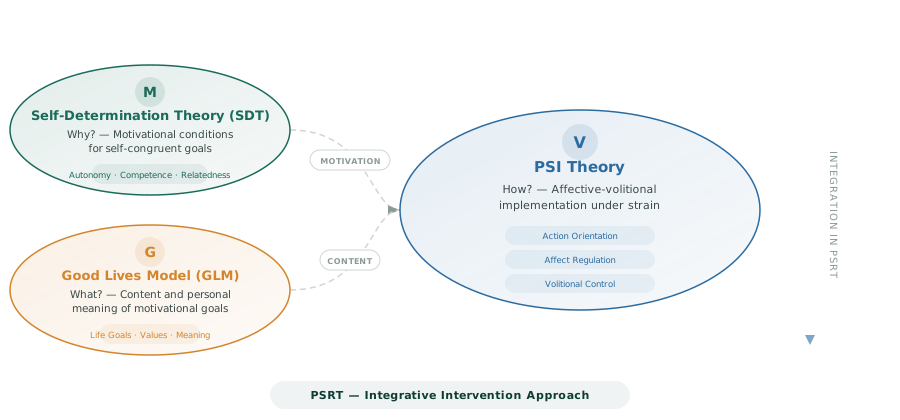
Self-Determination Theory (SDT)
Clarifies the motivational conditions under which goals are experienced as self-congruent
Good Lives Model (GLM)
Specifies the content and personal meaning of motivational goal orientations
PSI Theory
Explains how self-congruent goals are implemented — or fail to be implemented — under affective distress
Integration into PSRT
Study Design
Study Type
Multicentre, interventional, randomised, controlled trial with two parallel treatment arms
Population
Inpatient rehabilitation patients (18–67 years) with cannabis dependence (ICD-10 F12.2)
Primary Endpoint
Primary endpoint: Affective-volitional self-regulation competencies (VCQ-S)
Secondary Endpoint
Secondary endpoint: Facets of impulsive behaviour (I-8)
Analysis
ITT analysis using linear mixed models (MMRM)
Project Timeline
Ethics Approval
Approved by Ethics Committee MLU Halle-Wittenberg (No. 2024-212)
Recruitment Start
Beginning of participant recruitment at both study centres
Trial Registration
Registration in the DRKS (DRKS00037137)
Protocol Version 1.0
Finalisation of the study protocol
Protocol Publication
Submission and publication of the study protocol
End of Recruitment
Planned completion of participant recruitment
Results
Data analysis and publication of study results